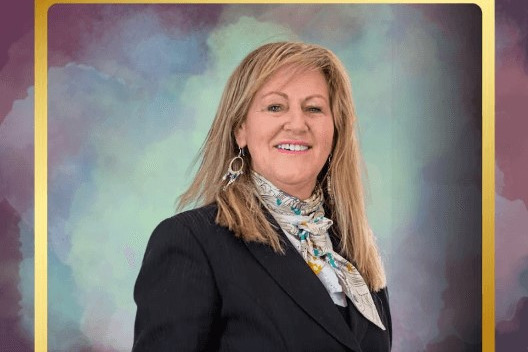
Visiting researcher Paula Harriott has been shortlisted for the Broadcasting Press Guild (BPG) Audio Awards. In contention for Best Radio Presenter are Sara Cox (Drive-Time Show, BBC Radio 2), Paula Harriott (The Secret Life of Prisons, Prison Radio Association), Ellen E Jones (Screenshot, BBC Radio 4), Jenny Kleeman (The GiS, BBC Radio 4), Kate Molleson (Composer of the Week, BBC Radio 3; live BBC Radio 3 concerts; Front Row, Radio 4).
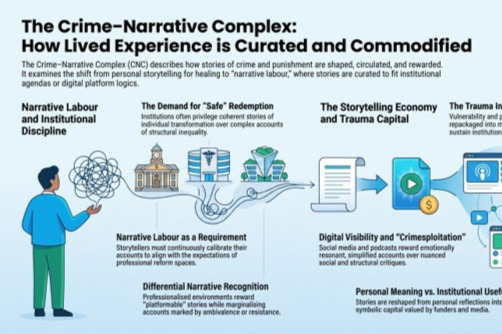
Visiting researcher Paula Harriott and collaborator Andi Brierley have published a reflexive article in Crime, Media and Society, available here.
The paper introduces the Crime–Narrative Complex (CNC) as a concept for understanding how lived experience stories of crime, punishment, trauma and desistance are curated and commodified across criminal justice. It examines how institutional and digital cultures can shape recognition by privileging particular forms of storytelling. The CNC offers a way of analysing the political economy of contemporary crime storytelling and the conditions under which particular narratives become credible, professionally valuable, and circulated.
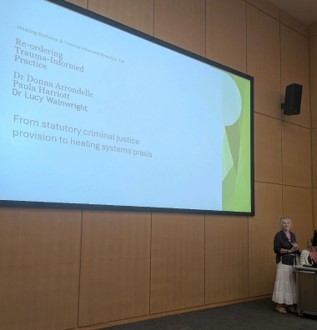
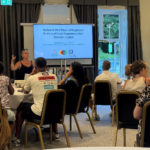
Visiting researcher Paula Harriott, along with some of our Experience for Justice collaborators hosted papers and panel sessions at the British Society of Criminology Conference, Nottingham, 2026.
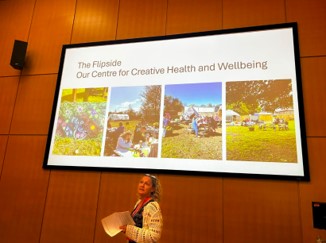
Paula critically and productively explored trauma informed practice in carceral contexts. Lucy introduced the work of Flip of the Coin, lived experience led community project, and Shadd and Ruth explored the potential of Challenge Labs for reimagining criminal justice systems by examining their underlying ideas, arrangements, and effects. All of these papers explored approaches with potential to co-create possibilities for change.
Co-authors Dwayne Antojado and Danica Darley hosted an ‘Author meets critic’ session, discussing the book ‘Beyond Autoethnography: Lived Experience Criminology’, which Gill and Lucy wrote the foreword for.
Professor Shadd Maruna’s review of the book connected the ideas of fragile expertise and epistemic suspicion with themes explored in Stanley Cohen’s final seminar, highlighting the challenges of recognising and valuing different forms of knowledge within justice research.
Professor Fergus McNeill’s review extended the discussion by exploring the potential of hermeneutic justice: where collective resources are made available for interpreting and communicating experiences. He emphasised the importance of dialogue and questioned approaches that prioritise the knowledge and perspectives of those who already hold power.
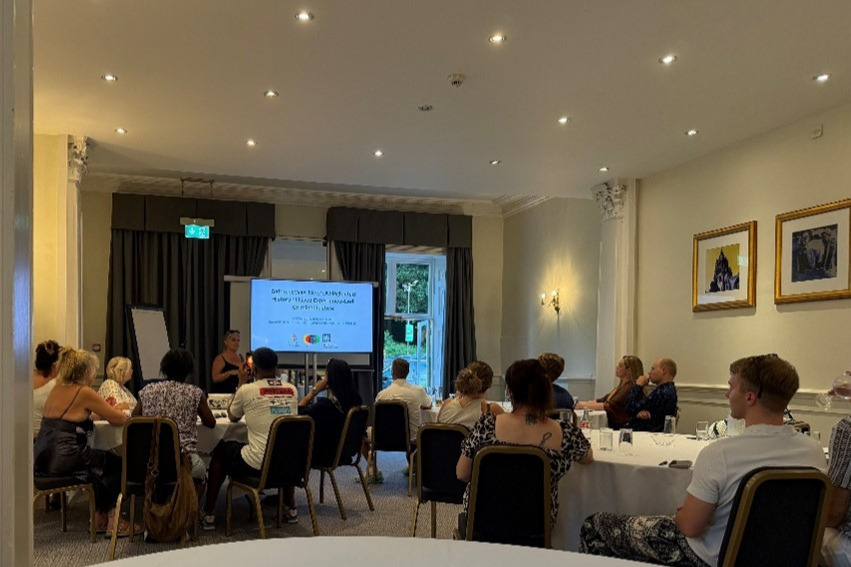
The Unlock Leadership Programme’s first residential retreat provided an opportunity for knowledge exchange between research, practice and lived experience communities.
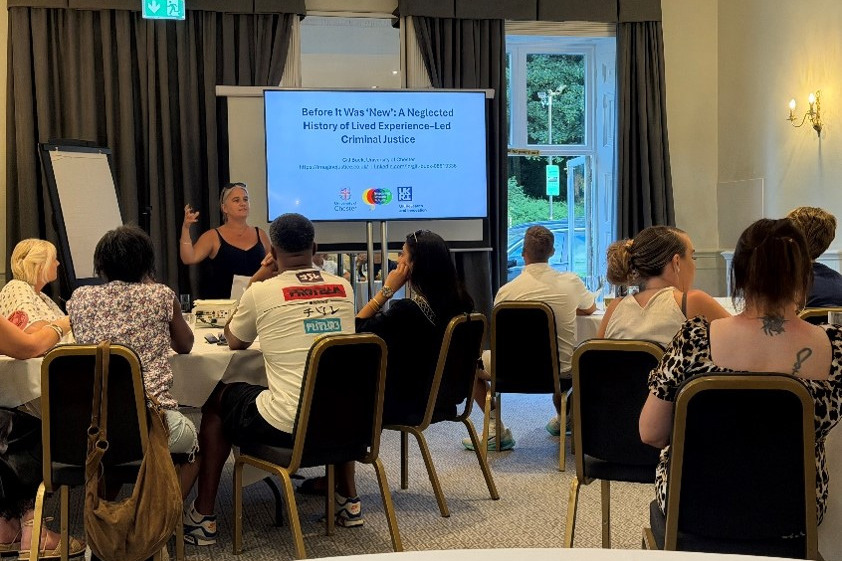
Gill Buck disseminated findings from the Imagining Posible Futures project, sharing insights into how lived experience has shaped understandings of justice and change across centuries.
Hosted by visiting researcher Paula Harriott, the retreat brought together leaders with experience of the criminal justice system, creating a space for dialogue, reflection and the exchange of knowledge.
The event demonstrated the value of connecting research findings with communities and practitioners, ensuring that knowledge generated through lived experience and research can contribute to ongoing conversations about justice reform and social change.