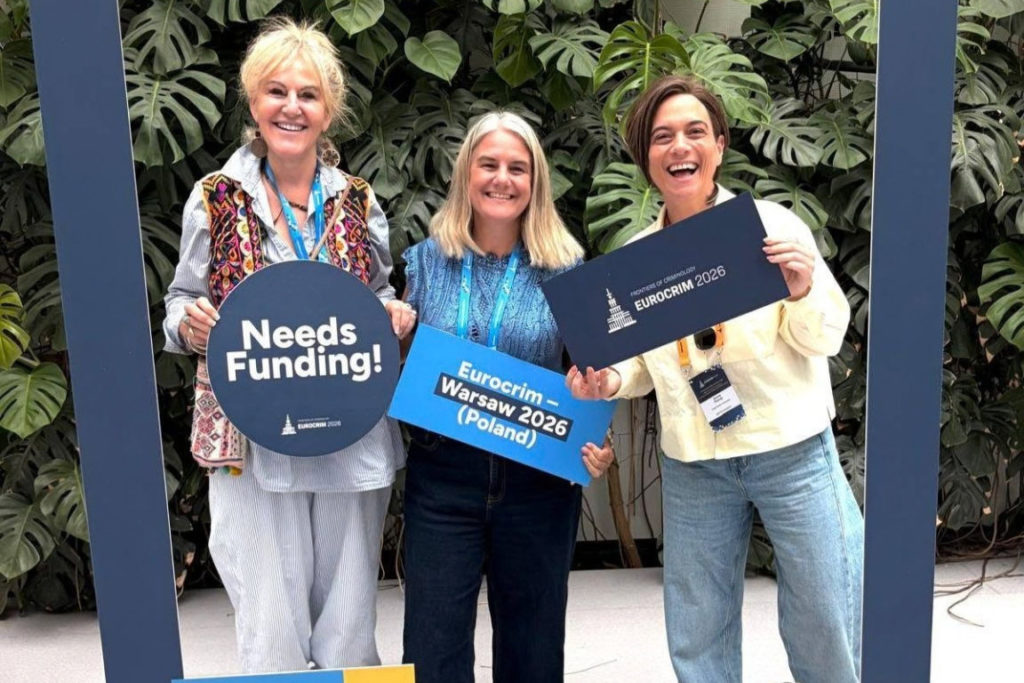
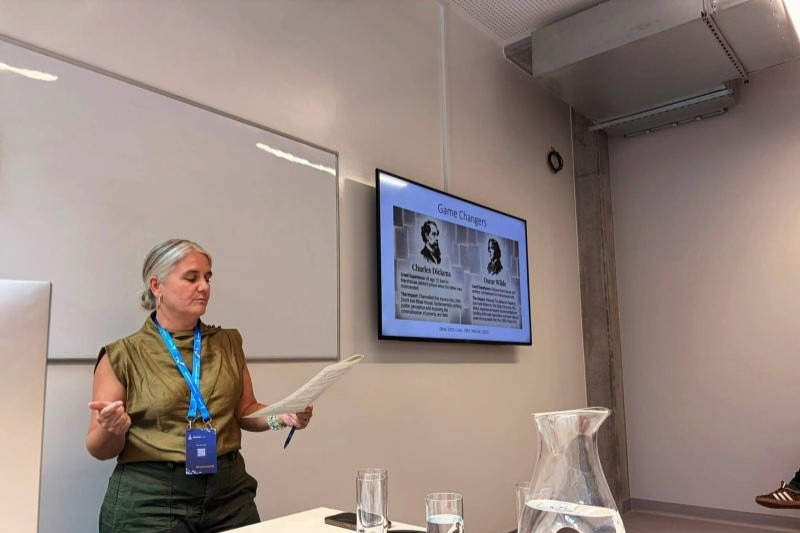
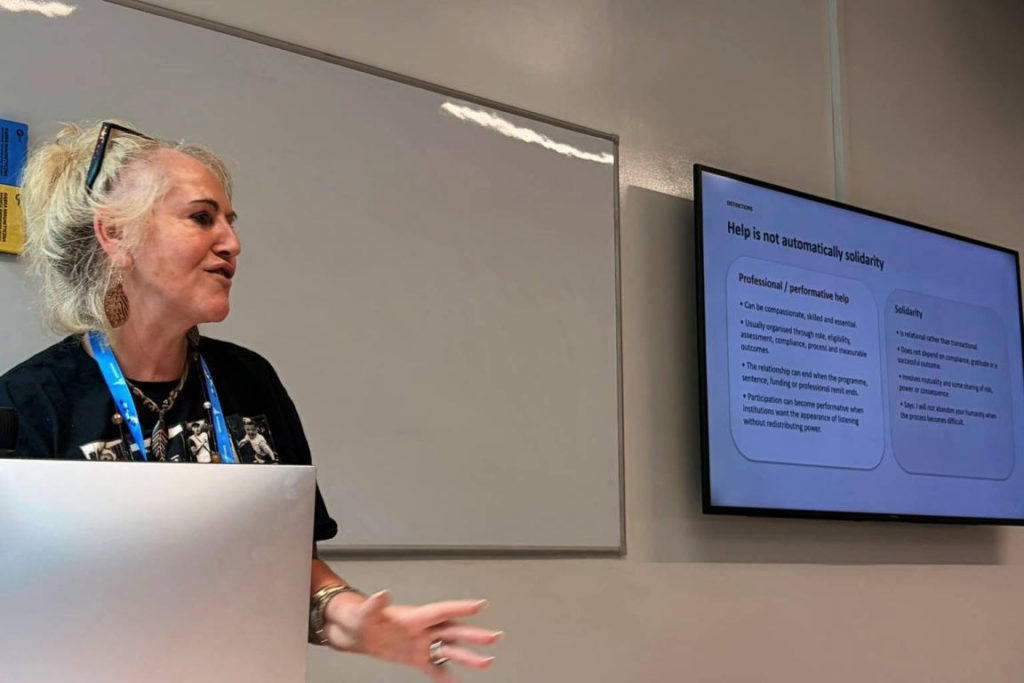
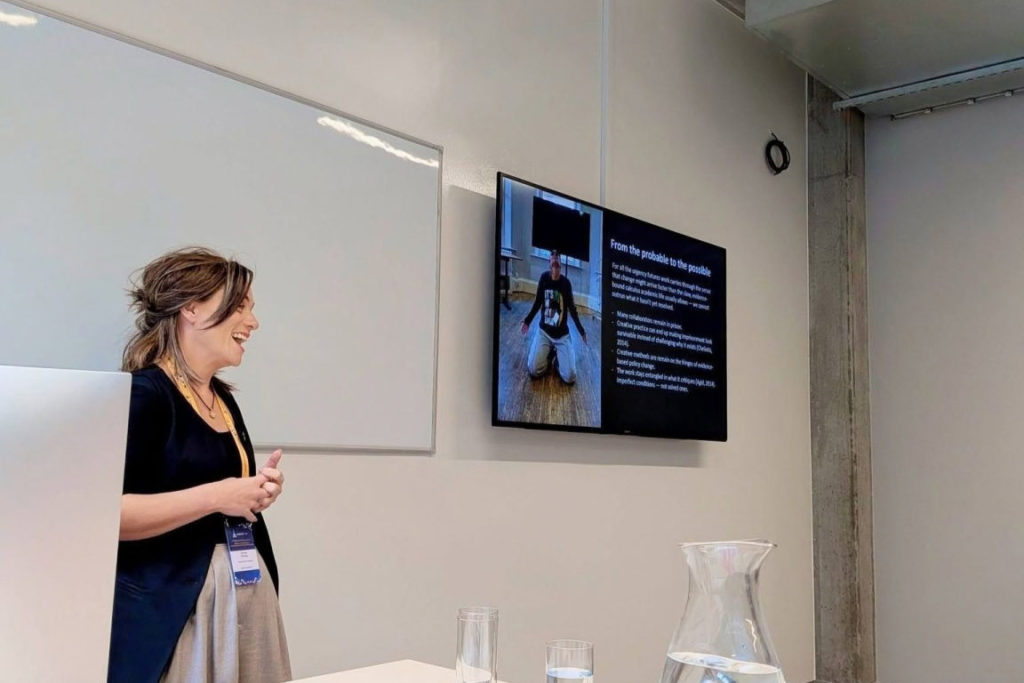
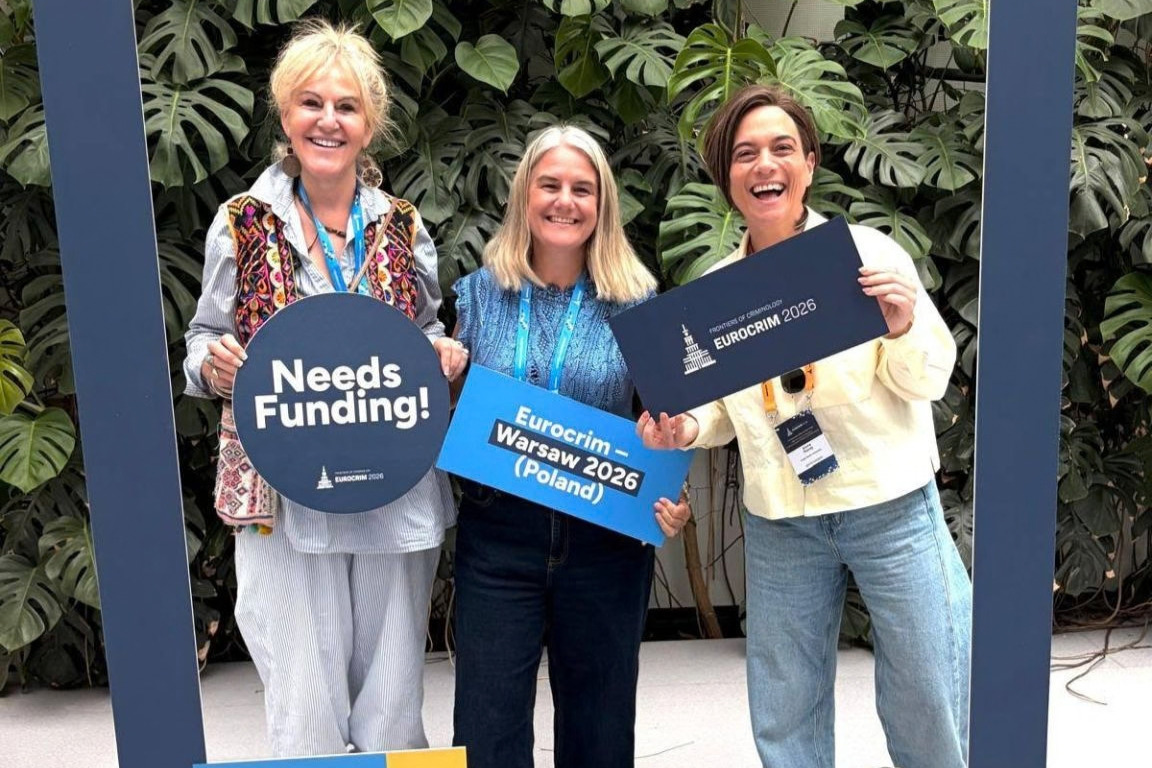
Some our UKRI-funded Imagine Justice team got to present emerging findings at Eurocrim 2026 in Warsaw.
We drew on empirical research, reflective practice, and collaborative work to explore where the concept of “lived experience” has come from; where it is now; and where it might go next. We’re still developing our analysis, but were excited to share some learning with colleagues across Europe.
A huge thank you to everyone who attended, joined the discussion, and challenged us to think critically about meaningful involvement and collaboration.
📖 You can explore our latest publications and emerging findings here
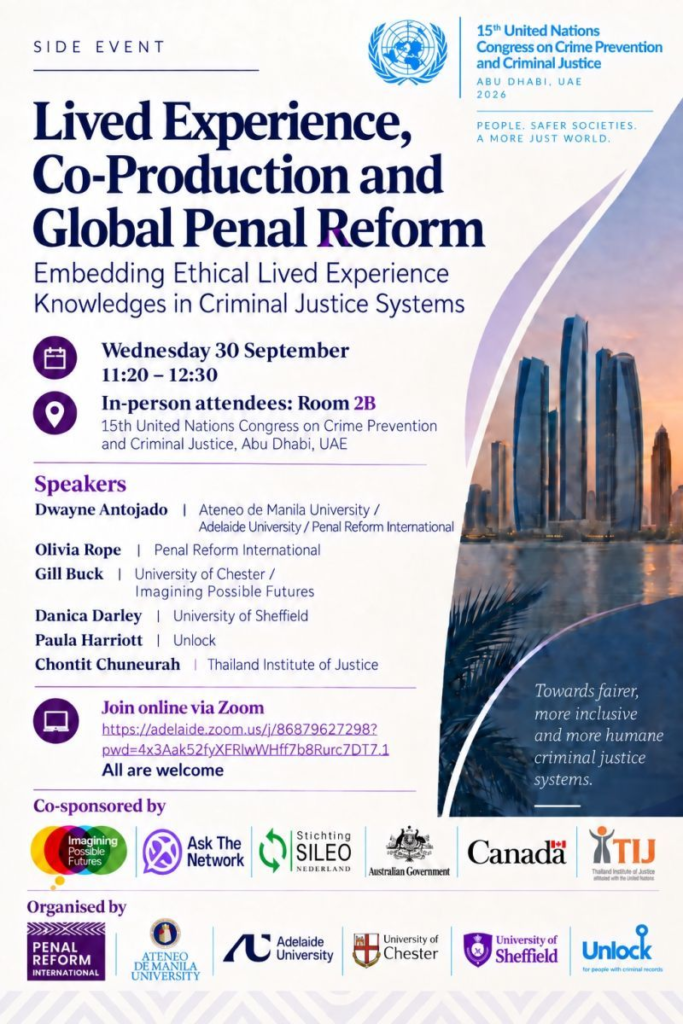
On Wed 30th Sept, team members Gill and Paula, along with collaborotors, joined an international panel at the 15th UN Congress Crime Prevention and Criminal Justice in Abu Dhabi.
Olivia Rope from Penal Reform International opened the discussed the strong human rights basis for lived experience involvement in criminal justice, emphasising that people affected by criminal justice systems should have meaningful opportunities to contribute to the development of the policies and standards that affect their lives, recognising participation as an important aspect of rights-based and inclusive approaches to criminal justice.
Gill Buck traced the long history of formal and informal organising by people in prison and advocated for greater continuity and institutional memory in participation mechanisms, ensuring that the knowledge and insights of people with lived experience are not treated as one-off contributions but are preserved, connected, and built upon over time. This includes meaningful and sustained participation in both national and multilateral processes, alongside engagement with other stakeholders working on these concerns, so that lived experience remains part of the knowledge base shaping criminal justice standards, policies, and programmes.
Chontit Chuenurah spoke about work in Thailand to involve people in prison in policy development and co-design. She highlighted the importance of ensuring that this involvement is grounded in clear ethical principles, including choice, recognition, reciprocity and privacy. The approach emphasises creating meaningful opportunities for people with lived experience to contribute to policies and programmes that affect them, while ensuring their participation is voluntary, valued, mutually beneficial, and respectful of their privacy and dignity.
Danica Darley drew on her lived experience of imprisonment as a mother to call for a participation framework grounded in rights, support, safety and accountability. She emphasised that women and girls’ participation should be recognised as a right and paid and supported appropriately, with safeguards against re-traumatisation and exploitation. She also highlighted the need to remove structural barriers, ensure diverse voices are represented and measure participation by whether it makes a meaningful difference to women and girls; not just by how many are engaged.
Paula Harriott highlighted evidence-based models of lived experience involvement from the UK, including prison councils, which provide structured opportunities for people in prison to contribute to decision-making and improvements within the prison system. She also advocated for greater development and recognition of lived experience leadership, both nationally and internationally, so that people with direct experience of criminal justice can play a sustained and influential role in shaping policy, practice and standards. She signposted delegates to the collective work of the Prisoner Policy Network and Unlock.
Host and chair Dwayne Antojado summarised the contributions and facilitated questions and comments from the floor.
The panel made a clear case for democratic, multilateral spaces to reflect stated commitments to participation and systematically build from strengths within communities.
Some our UKRI-funded Imagine Justice team got to present emerging findings at Eurocrim 2026 in Warsaw.
We drew on empirical research, reflective practice, and collaborative work to explore where the concept of “lived experience” has come from; where it is now; and where it might go next. We’re still developing our analysis, but were excited to share some learning with colleagues across Europe.
A huge thank you to everyone who attended, joined the discussion, and challenged us to think critically about meaningful involvement and collaboration.
📖 You can explore our latest publications and emerging findings here
Visiting researcher Paula Harriott and collaborator Andi Brierley have published a reflexive article in Crime, Media and Society, available here.
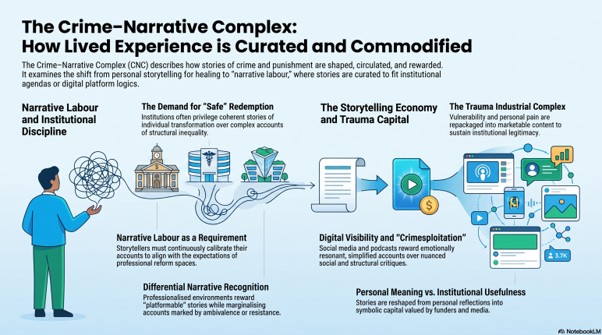
The paper introduces the Crime–Narrative Complex (CNC) as a concept for understanding how lived experience stories of crime, punishment, trauma and desistance are curated and commodified across criminal justice. It examines how institutional and digital cultures can shape recognition by privileging particular forms of storytelling. The CNC offers a way of analysing the political economy of contemporary crime storytelling and the conditions under which particular narratives become credible, professionally valuable, and circulated.