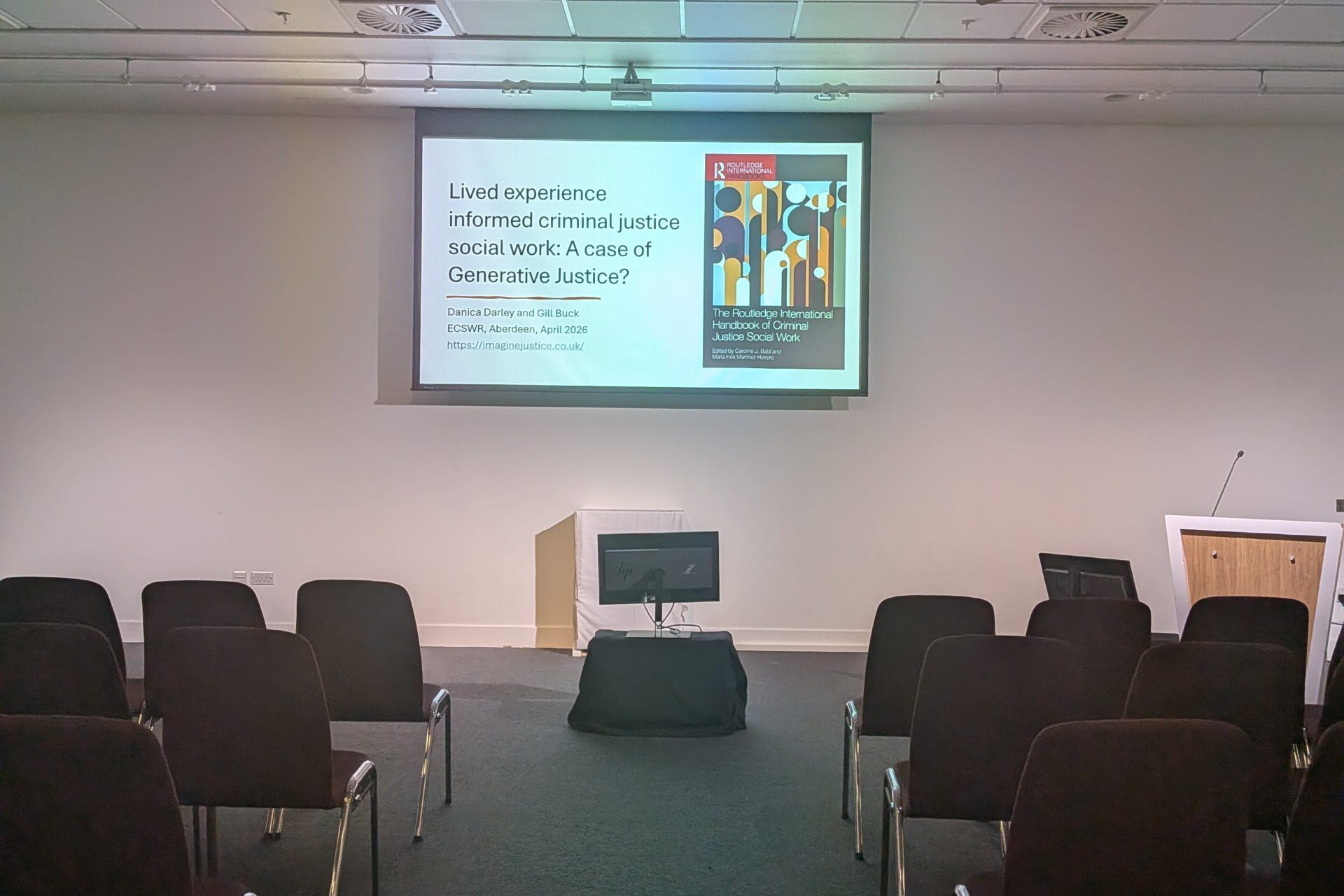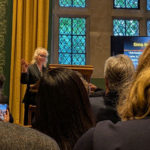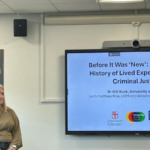
In April, Gill spoke at the European Conference for Social Work Research (ECSWR) in Aberdeen. Gill and colleague Dr Danica Darley from the University of Sheffield presented their reflective chapter “Lived experience informed criminal justice social work in England: A case of generative justice?”, which has been published in The Routledge International Handbook of Criminal Justice Social Work.
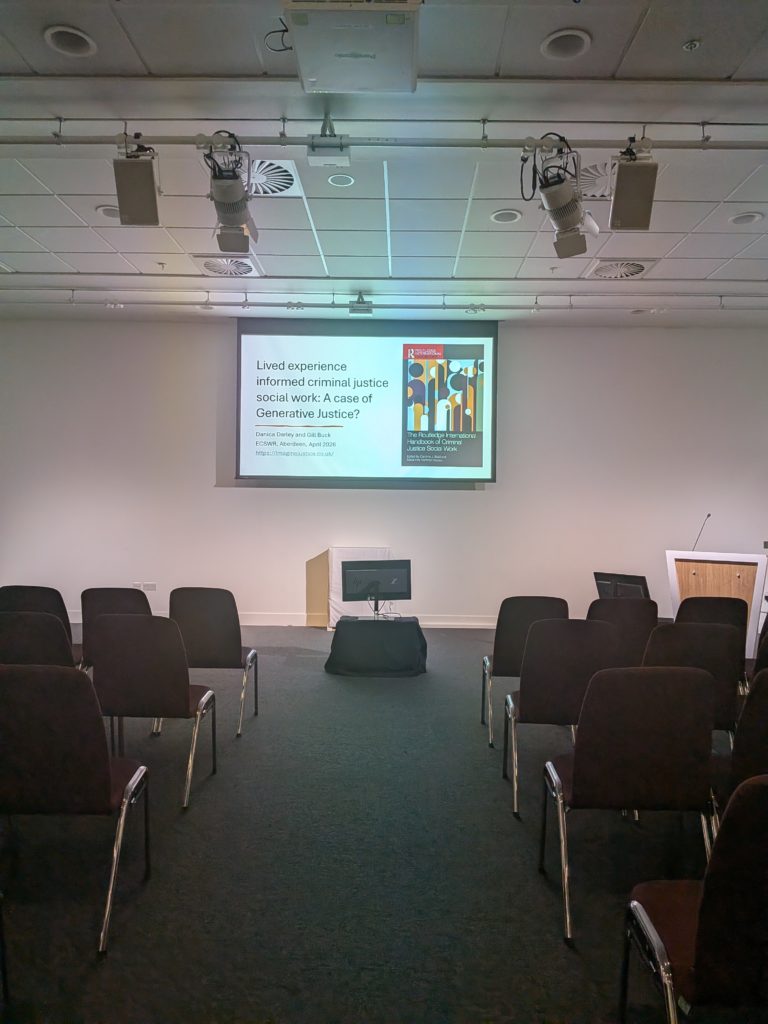
Social work internationally is rooted in solidarity with people facing social disadvantage, yet those with lived experience of criminalisation remain largely excluded from shaping the knowledge and practice that affect their lives. We argued that this gap undermines the profession’s commitment to inclusion. In response, we explored how Generative Justice can help reimagine a more equitable approach. Drawing on lived experience-informed practice in criminal justice settings, we highlighted how peer-led and co-productive models can build trust, inspire hope, and strengthen services, while also acknowledging the ethical complexities involved.
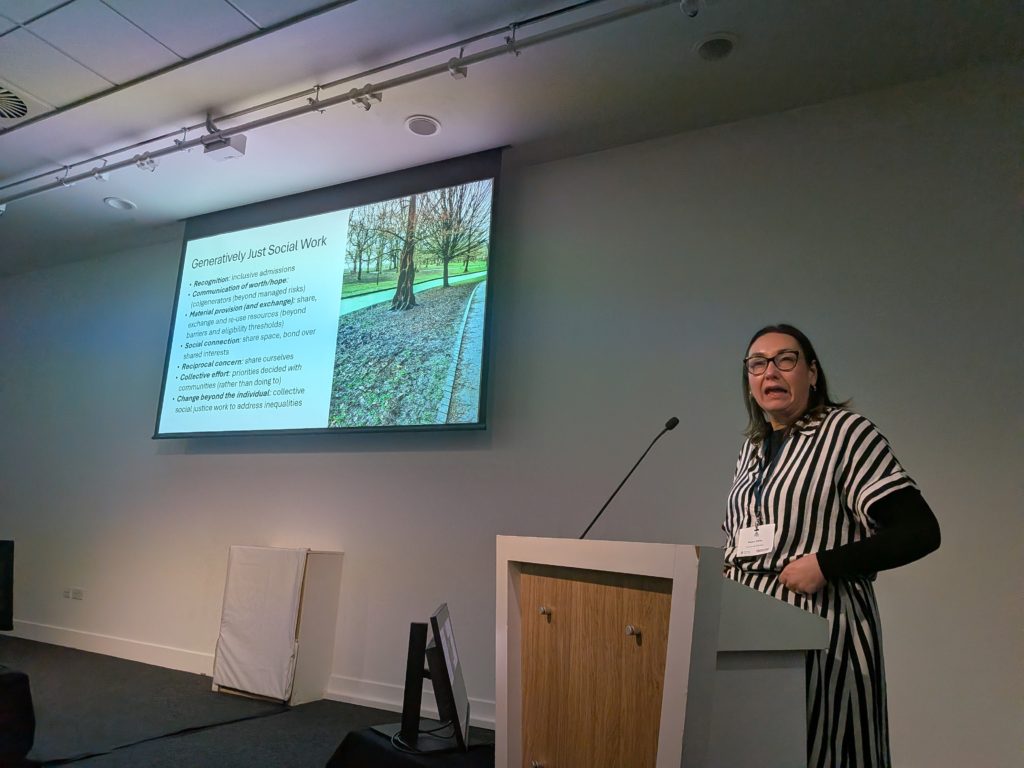
Using the seven principles of Generative Justice, we showed how social work can move beyond risk-averse, paternalistic systems toward practices grounded in recognition, reciprocity, and collective change. Ultimately, we called for dismantling structural barriers and centring experiential knowledge to transform social work into a more just, inclusive, and socially responsive profession.